
The Riddick Plantation, Hertford County, NC

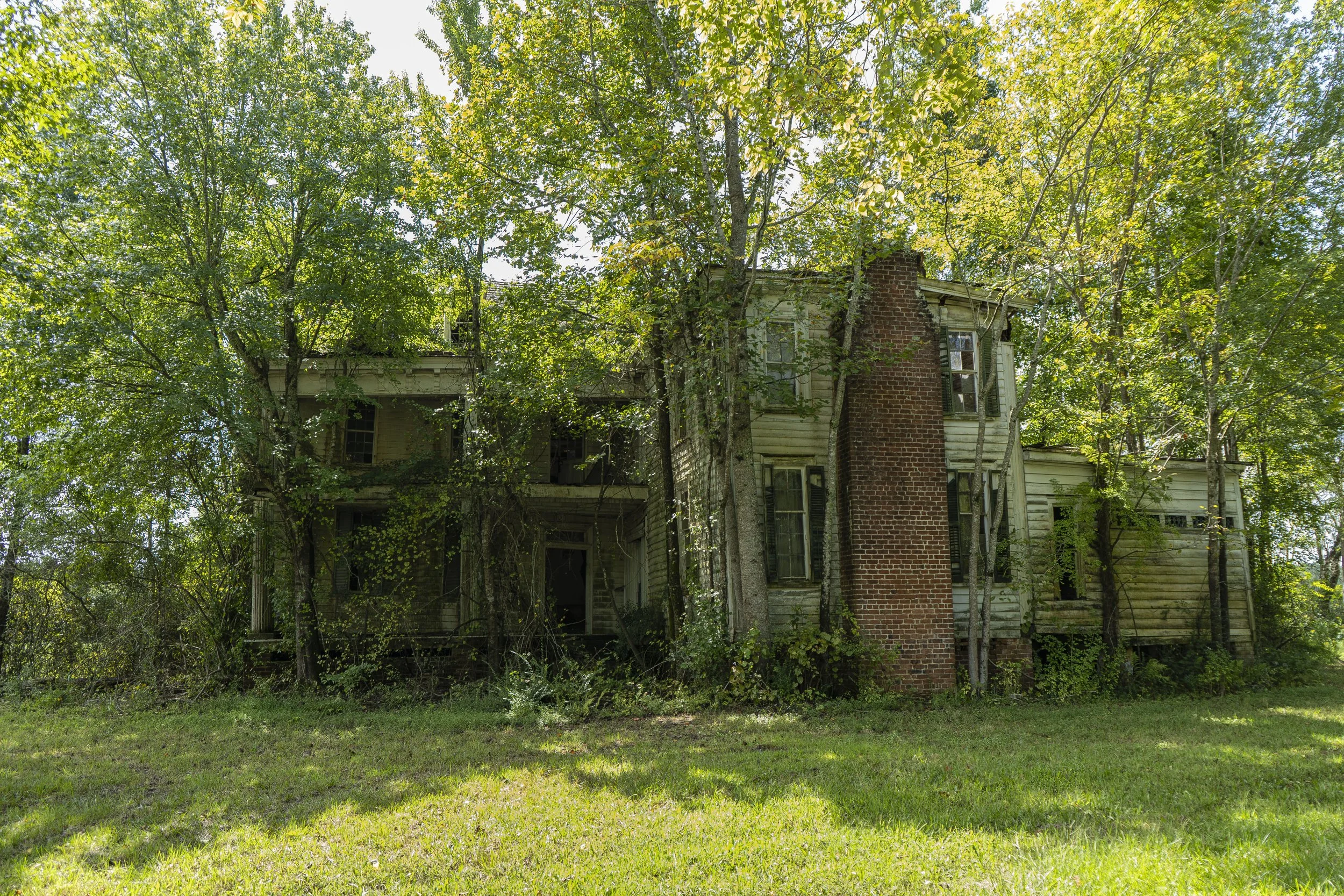
James Maney/Abram Riddick House, originally known as “AVOCA,” meaning “house on the hill”:
James Maney arrived in America in the early 18th century as a colonist, settling on Long Island, New York, with his parents. He later relocated to Virginia before migrating further south to what is now Hertford County, North Carolina, specifically the Como area.
Maney constructed a beautiful antebellum home along the banks of the Chowan River, naming it AVOCA, which translates to “house on the hill.” The original residence was built entirely from materials produced on the plantation, which featured its own brick kiln and sawmill. The finished home was three stories tall, comprising ten rooms, three halls, and a large cellar.

In addition to his home, James Maney established a ferry service just a few hundred yards away on the Chowan River. Over time, the surrounding area became known as Maney's Neck Township. For generations, the ferry served travelers crossing the river and remained in operation well into the era of Abram Riddick. Although its exact location has been lost to time, its presence once played an important role in connecting this rural community. The ferry was eventually abandoned after the death of James D. Riddick Sr., one of Abram's sons.
When James Maney died in 1754, his family continued to call the plantation home for nearly four generations. The property witnessed both prosperity and hardship. In July 1781, during the American Revolution, Tories loyal to the British Crown burned the Maney plantation. Rather than abandon the land, the family rebuilt and carried on, maintaining the plantation for more than forty years afterward.
That chapter came to a close in 1825 when the property was sold to Abram Riddick. The Maney family then headed west to Tennessee alongside the Murfrees family, whose name would forever be tied to the nearby town of Murfreesboro, North Carolina.
Born in 1801, Abram Riddick purchased Avoca Plantation as a young man and quickly set about building his own legacy. Acre by acre, he expanded his holdings until he controlled nearly 5,000 acres of land. His estate eventually stretched across much of what is now Como and the surrounding countryside, making him one of the area's most prominent landowners of the nineteenth century.

Shortly after moving into his new residence along the Chowan River, Riddick reportedly encountered significant mosquito issues. This is believed to be a primary reason he relocated the home approximately one mile inland, away from the river, to its current location. With the assistance of his slaves and possibly neighbors, the house was carefully moved. Abram subsequently expanded the home by adding a two-story section with two additional rooms and two new hallways, creating a twelve-room antebellum residence.
As the plantation prospered and the community grew, Abram Riddick saw the need for onsite medical care and education. A doctor was employed to tend to the health needs of his family and the enslaved workers who maintained the plantation, while a schoolteacher was brought in to educate local children who likely lived within walking distance or on the plantation grounds. According to A History of Riddick Plantation of Hertford County, North Carolina (1993), three outbuildings remained at the time of publication, believed to include the doctor’s office, the schoolteacher’s house, and a dairy house—two of which still stand today, though heavily overgrown.

The plantation’s growth also saw the establishment of a church and a merchant country store, serving the community by providing goods that local farms could not produce. The ferry and wharf remained operational, facilitating trade for both merchants and farmers. This developing community became known as “Riddicksville,” evolving beyond a mere plantation into a thriving working township.
Family Legacy:
The Riddick family is believed to still own the plantation today. To trace the family lineage, Abram Riddick married Ann Mariah Dillard. According to the 1850 census, they had at least five children: four daughters: Martha, Alexaina, Emily, and Rebecca - and a son, Samuel, who was eight years old at the time. Two years later, they had another son, James Dillard Riddick.
Samuel Riddick pursued medical studies at the Medical College of Virginia before enlisting to fight for the Confederacy in the Civil War. He was wounded shortly before the Battle of Gettysburg and died from his injuries days later.

James Dillard Riddick married Jenny Bynum, and together they had one son and six daughters. Their son, named Samuel after his uncle, also attended the Medical College of Virginia and earned a Doctor of Medicine degree. Samuel married Emma, and they had at least two daughters, Daisy and Lillian, though Lillian is believed to have died young.
James Dillard Riddick Sr. was widowed when Jenny passed away at a relatively young age. He remarried Nora Bryant, and they had one son, James Dillard Riddick Jr., born in 1909.
James Dillard Riddick Sr. died in 1926, and Nora lived until the 1950s, after which James Jr. assumed responsibility for the plantation.
James Jr. married Marjorie Griffin and had two sons: James Dillard Riddick III (born July 1950) and William Huge Riddick (born August 1952). Tragically, William suffered an accident that left him in a coma and died prematurely. Marjorie Riddick also passed away, leaving James Jr. a widower.
As of the 1993 publication of the plantation history, both James Jr. and James III were still living. More recent records indicate that James Jr. died in 2000 at age 91, and James III passed away in 2020 at approximately 70 years old.
While the plantation is believed to remain in the possession of the Riddick family, I have not been in direct contact with them. All photographs included here were taken from the road, except for some archival black-and-white images sourced separately.
Source Cited:
Harris, F. H., Jr (2009). A History of the Riddick Plantation of Hertford County, North Carolina. Murfreesboro Historical Association.
