
The Caswell County Courthouse: A Witness to a Divided Time
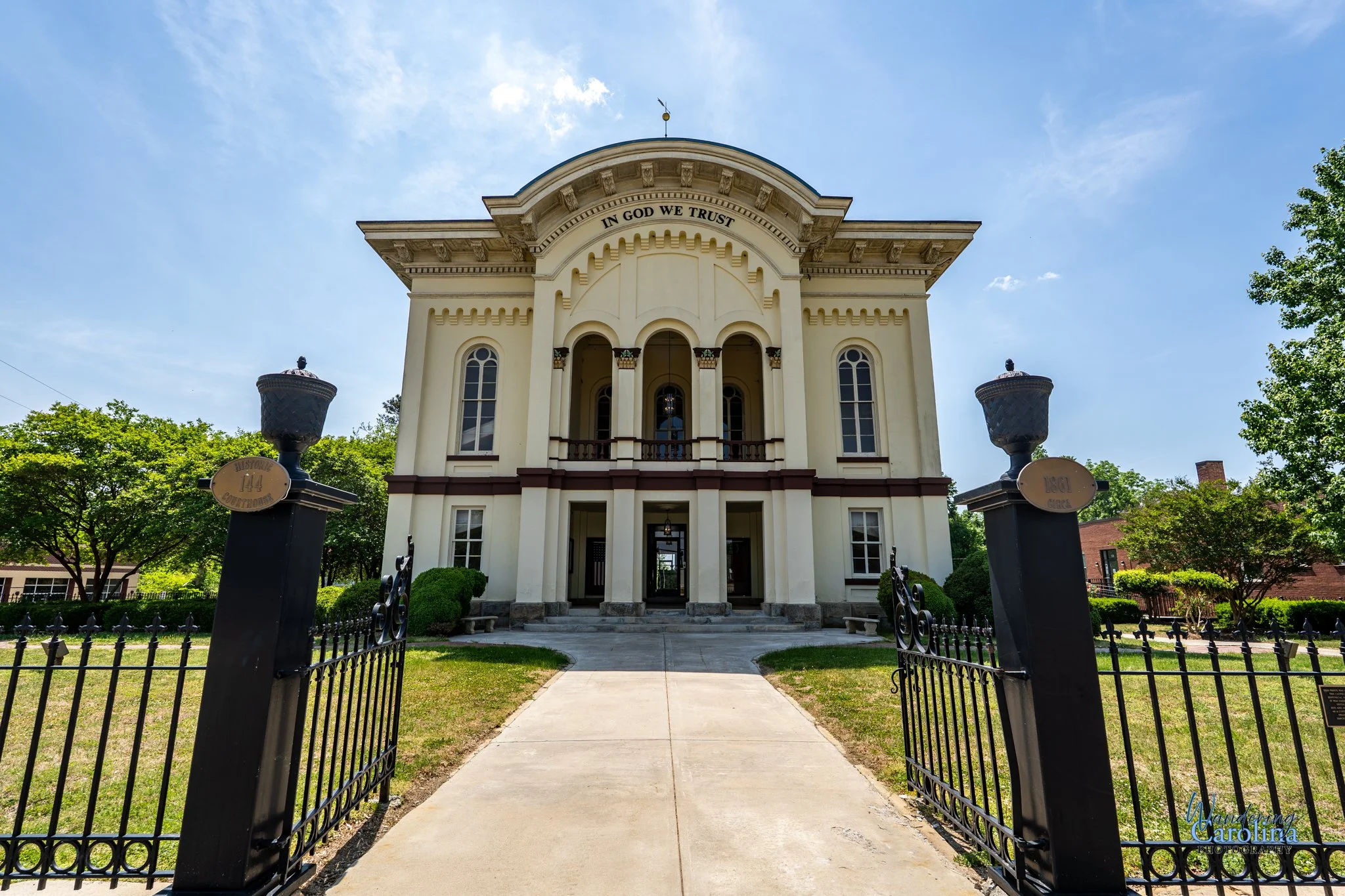
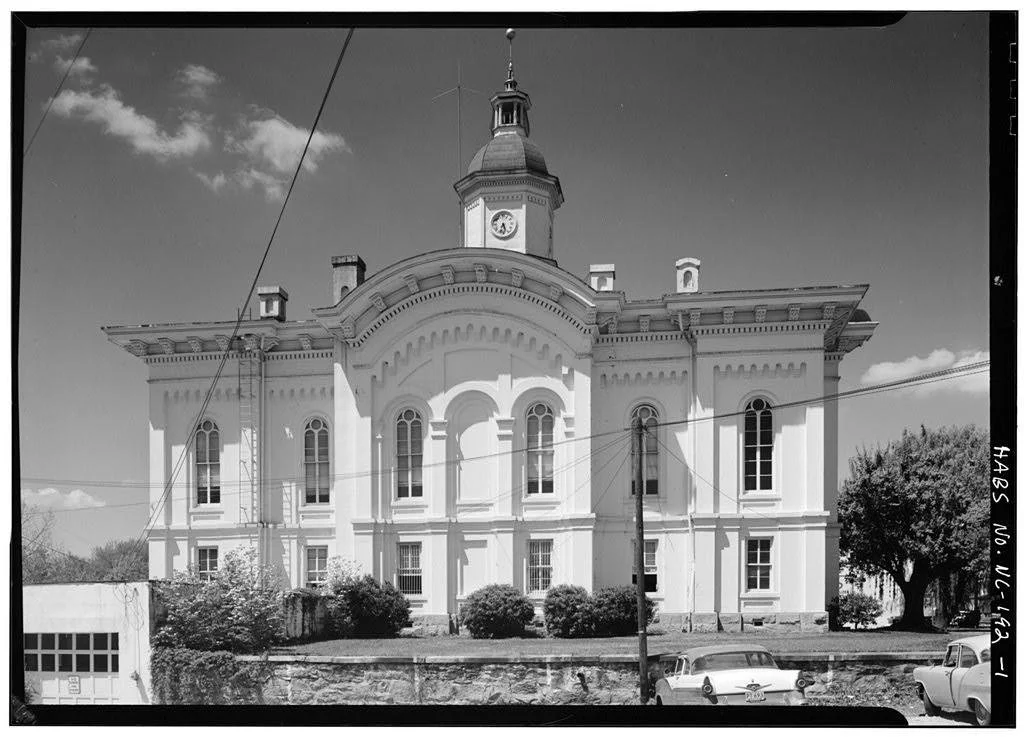
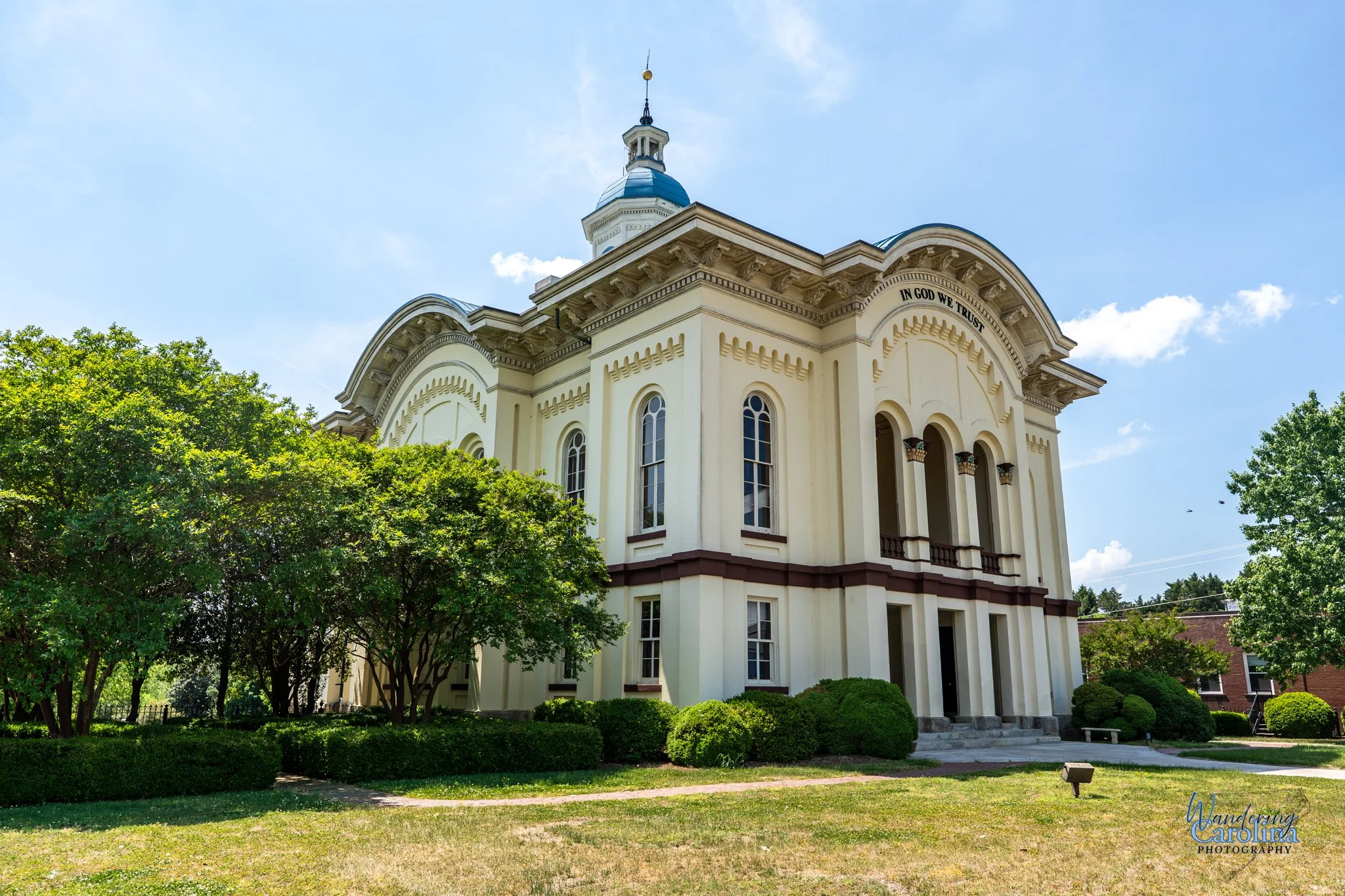
The Caswell County Courthouse in Yanceyville, North Carolina, is more than a historic building—it’s a place where the past still feels close. Constructed between 1858 and 1861, it stood as a symbol of civic order in a largely rural county, representing stability, law, and community.
But within a decade, that sense of order would be tested. The courthouse would become tied to Reconstruction-era events that helped shape the course of North Carolina’s history, placing it at the center of one of the state’s most difficult and defining moments.
A Turning Point in Reconstruction
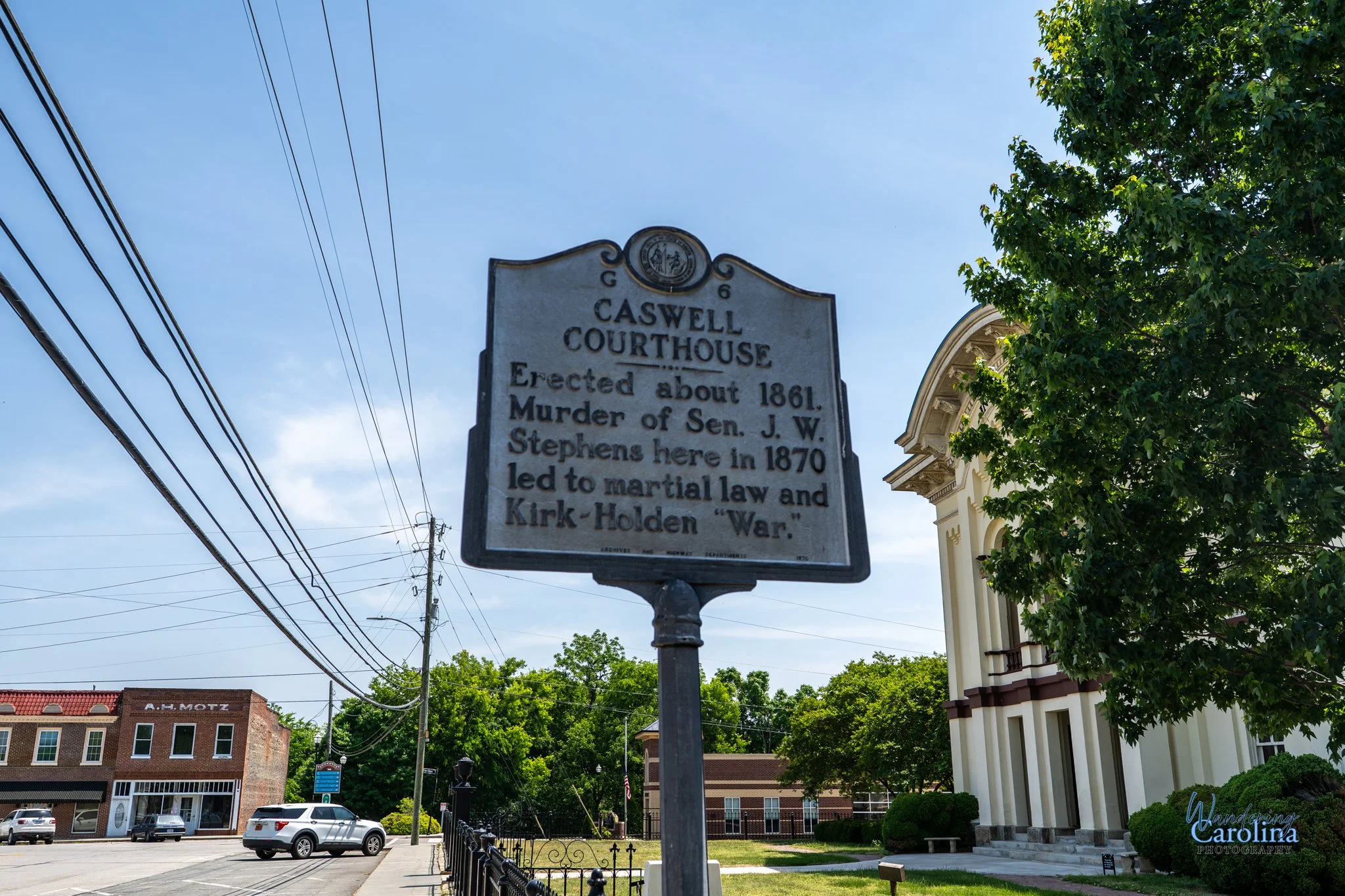
In May 1870, the violence that had been building in Caswell County reached a turning point inside the courthouse itself. John Walter Stephens, a Republican state senator and advocate for newly freed Black citizens, was attending a political gathering when he was lured away from the courtroom under false pretenses. He was led downstairs into a secluded room, where a group of men—waiting in ambush—overpowered and brutally killed him, leaving his body on a woodpile to be discovered the next day. His murder, widely believed from the beginning to be the work of the Ku Klux Klan, shocked the region and became a defining moment in the growing unrest.
But this was not an isolated act of violence—it was part of a larger, calculated effort to intimidate and silence political opposition during Reconstruction. As formerly enslaved individuals across North Carolina began to exercise their right to vote and hold office, organized groups like the Klan responded with targeted acts of terror meant to maintain control and suppress change.
A Warning Ignored
That pattern of violence had already been unfolding in the months leading up to Stephens’ murder.
In neighboring Alamance County, Wyatt Outlaw—a formerly enslaved man, town commissioner, and outspoken advocate for Reconstruction—was targeted for his political involvement. In February 1870, he was taken from his home by members of the Ku Klux Klan and lynched. His body was left hanging near the courthouse in Graham, North Carolina, a deliberate and public display meant to intimidate others.
Outlaw’s killing sent shockwaves through the area, making it clear that violence was being used not just to punish individuals, but to silence an entire movement. By the time Stephens was murdered just months later inside the Caswell County Courthouse, the pattern was impossible to ignore—and the pressure on state leaders to respond had reached a breaking point.
The Kirk–Holden War
The assassination of John Walter Stephens—paired with the earlier killing of Wyatt Outlaw in nearby Alamance County—marked a turning point, revealing just how volatile the region had become and setting the stage for what would soon be called the Kirk–Holden War.
At the time, Governor William Woods Holden was under mounting pressure to act. In many communities, local officials either could not or would not stop the violence tied to white supremacist groups like the Ku Klux Klan.
In response, Holden turned to the Shoffner Act, passed in 1869. The law gave him extraordinary powers—allowing him to declare counties in a state of insurrection, suspend habeas corpus, and use state forces to restore order where civil authority had broken down. Acting under this authority, Holden declared martial law in Alamance County on March 7, 1870, and later in Caswell County on July 8.
And in the summer of 1870, he used it.
Troops in Yanceyville
As noted by the American Battlefield Trust, “Holden sent a militia led by Colonel George W. Kirk to Alamance and Caswell counties to put down the insurrection and arrest Klan suspects.”
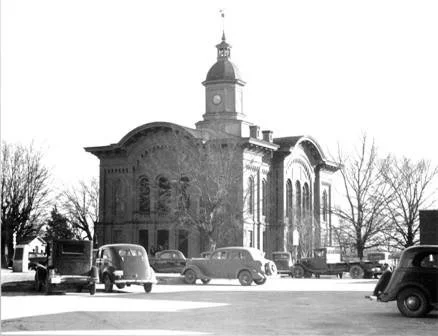
By the summer of 1870, that effort reached Caswell County, with Yanceyville serving as a base of operations. The courthouse—already the site of John Walter Stephens’ murder—once again stood at the center of unfolding events.
From there, Kirk’s men began rounding up those suspected of involvement in the violence, many believed to be tied to the Ku Klux Klan. Dozens were taken into custody, often held without immediate trial, as the state attempted to regain control of a region where intimidation and fear had taken hold.
For a brief moment, the campaign disrupted the violence—but it also sparked fierce opposition, as many questioned whether the methods used had gone too far.
The Fallout
Holden’s actions quickly became one of the most controversial decisions of his governorship. Critics argued that suspending civil liberties and detaining prisoners without due process went too far, even in the face of widespread violence.
The political consequences were swift. By the end of 1870, Holden had been impeached and removed from office—the first governor in United States history to face that outcome.
The events surrounding the Kirk–Holden War marked a turning point. What began as an effort to suppress violence and protect citizens instead deepened political divisions, leaving behind a legacy that is still debated today.
Standing There Now
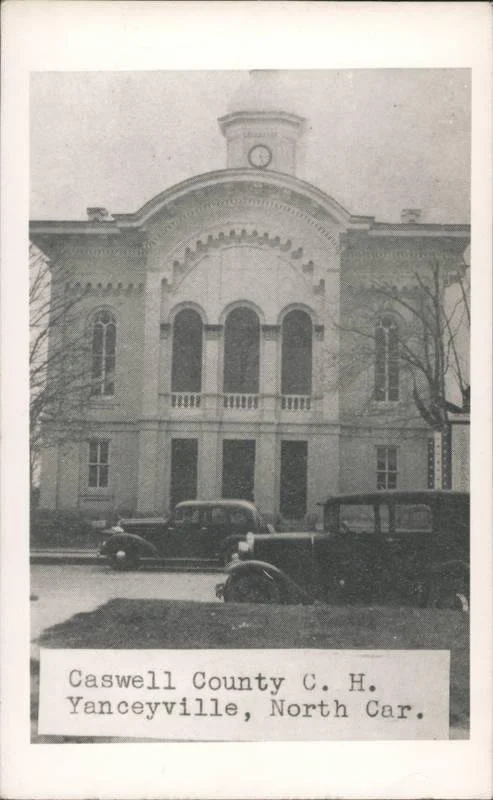
Today, the Caswell County Courthouse still stands, largely unchanged in its appearance. It’s easy to admire its architecture or appreciate its age—but it’s much harder to grasp what once unfolded within its walls.
This wasn’t just a government building. It was the site of political tension, violence, and decisions that shaped the future of the state.
Information for this article was gathered from a combination of National Register documentation, North Carolina historical records, and Reconstruction-era accounts related to Caswell County.
