
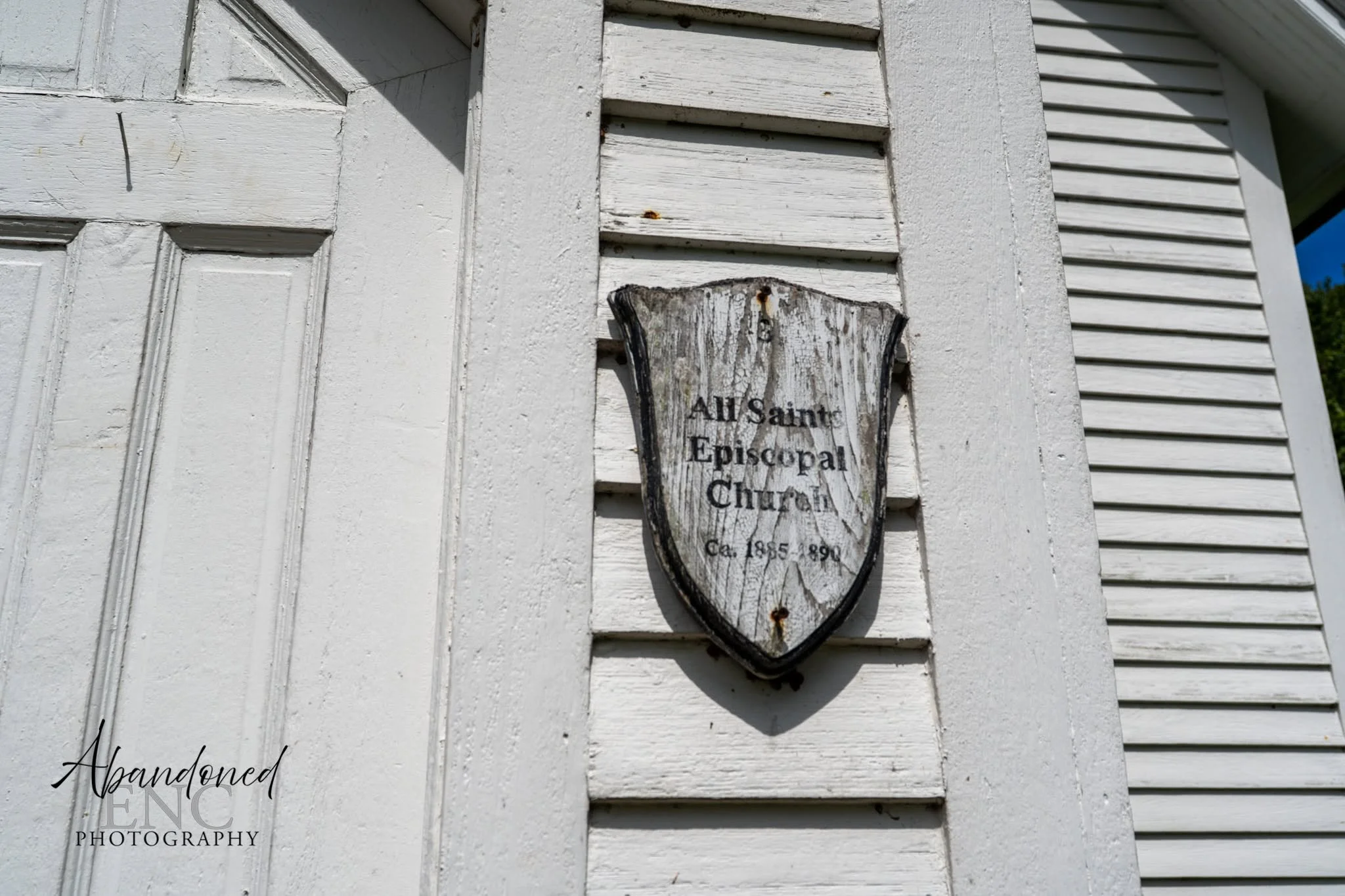
All Saints Episcopal Church
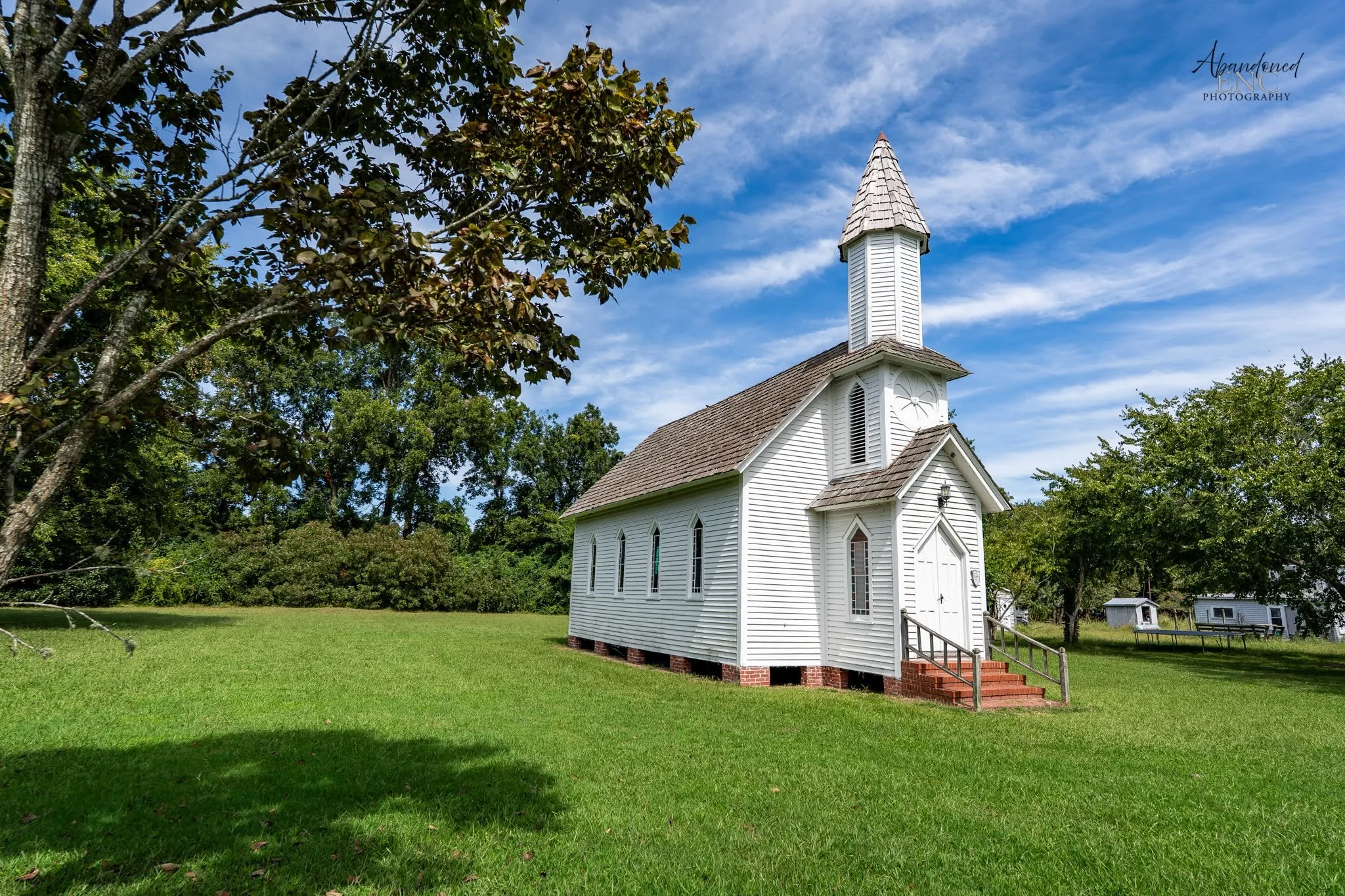
A Small Mission Church with a Big Story in Fairfield, North Carolina
Some of the most fascinating historic churches aren't the grand cathedrals or towering steepled sanctuaries. They're the small country churches that quietly served generations of families before fading into history.
Tucked away in Fairfield, Hyde County, All Saints Episcopal Church is one of those places.
Although the modest Gothic Revival church dates to the late nineteenth century, its story actually began years before the first board was nailed into place. For nearly twenty years, the congregation worshipped wherever they could, determined to establish an Episcopal presence in Fairfield despite having no permanent home.
Today, the church still stands as a reminder of the faith, perseverance, and generosity of the people who built it.
A Congregation Before a Church
Episcopal services were first held in the Fairfield area as early as March 1866, only months after the Civil War had ended. At the time, there was no church building. Worship services were held in the Fairfield Academy, where attendance steadily increased.
By 1877, the congregation had grown enough to hold two services each month. The parish register notes that the congregation was "large and attentive," with worship becoming increasingly reverent and organized.
Then an unexpected setback occurred.
For reasons the parish register simply describes as "a petty bit of prejudice," the academy's doors were closed to the congregation. Rather than allowing the mission to disappear, members secured another meeting place and continued gathering faithfully while working toward a permanent church.
Their determination would eventually lead to the construction of All Saints.
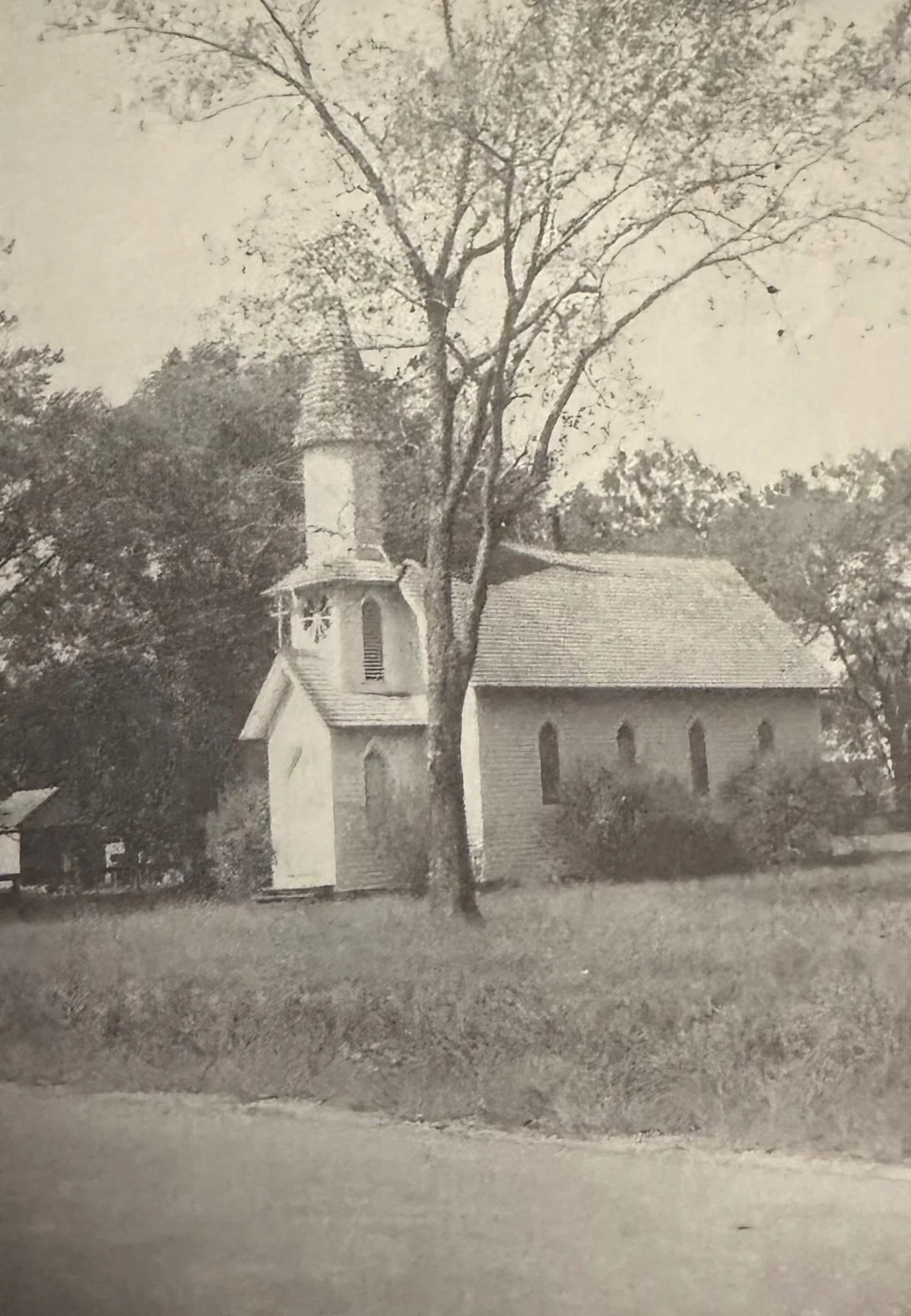
Image taken from History Of Hyde County. Date unknown.
Building a Permanent Church
The turning point came in 1885, when local resident Laura Elizabeth Blackwell sold a half-acre parcel of land to the Trustees of the Diocese of East Carolina for $100. Five years later, she sold an adjoining half-acre for $75, creating the church property that remains today.
Historic records indicate the church was constructed sometime between 1885 and 1890. While the names of the builders have been lost to history, the National Register of Historic Places nomination praises the building as one of the finest surviving examples of a small rural Episcopal mission church in eastern North Carolina.
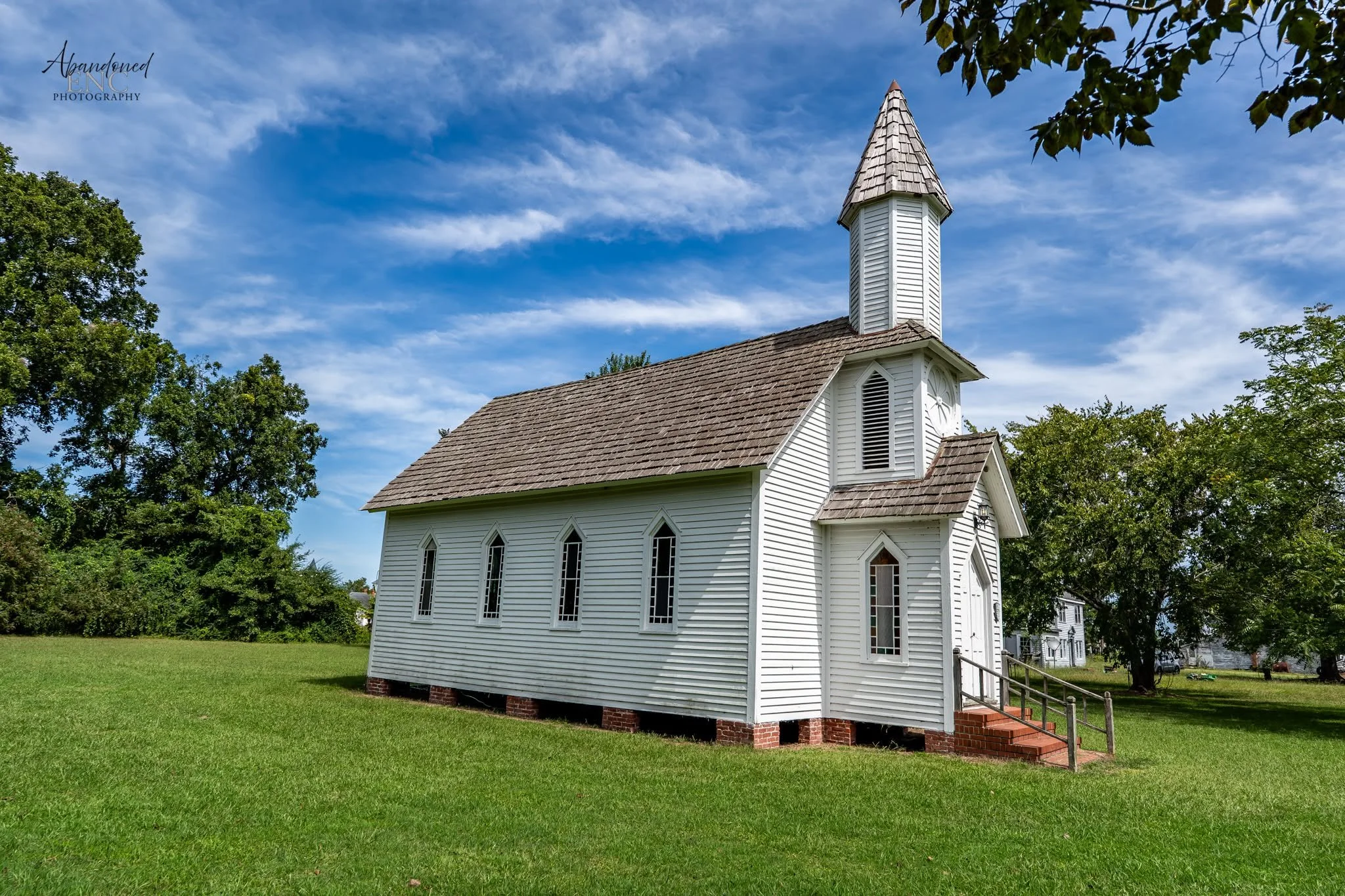
Built in the Carpenter Gothic style, the church features narrow pointed-arch windows, a vestibule topped with a belfry, and an elegant octagonal steeple. Perhaps its most remarkable surviving feature is its original wooden roof shingles, laid in alternating split and scalloped patterns, an uncommon detail that has survived for well over a century.
Unlike many rural churches of the era, All Saints was never intended to have a cemetery. One of the conditions included in Laura Blackwell's original deed stated that no burials could ever take place on the church property, making it unusual among nineteenth-century country churches.
The Woman Behind the Church
While the congregation built All Saints together, one person stands out as being especially important to its history.
Laura Elizabeth Blackwell did far more than sell the land.
She helped make the church possible.
After selling the original property in 1885 and the adjoining parcel in 1890, she continued supporting the congregation financially. Church records show that in 1899 she personally paid the remaining balance needed to construct the church fence after other funds had been exhausted.
Her generosity continued until the end of her life.
When Laura Blackwell wrote her will in 1912, she left $250 to All Saints Episcopal Church and another $250 to St. Peter's Episcopal Church in Washington, demonstrating her lasting commitment to the Episcopal Church in eastern North Carolina.
She also requested to be buried in Fairfield beneath a gray granite cross, a fitting tribute to a woman whose generosity helped shape one of Hyde County's most distinctive historic churches.
Without Laura Blackwell's support, it's difficult to imagine All Saints being built when it was.
A Church Serving Generations
For decades, All Saints faithfully served the Fairfield community.
The parish register documents baptisms, confirmations, marriages, and funerals involving many of Hyde County's best-known families, including the Carters, Swindells, Joneses, Cutrells, Barbers, Midyettes, and Simmonses.
One question left unanswered in Hyde County History was exactly when All Saints Episcopal Church was consecrated. The book notes that no record of the consecration had been found. However, the original parish register preserves the answer. On November 12, 1907, Bishop Robert Strange officially consecrated All Saints Episcopal Church, formally dedicating the building for sacred worship after it had already been serving the Fairfield community for years.
Services continued well into the twentieth century. The last recorded marriage took place on June 12, 1960, and the final funeral was held later that same year.
As Fairfield's population declined, so did the congregation. The Diocese ultimately closed the church in 1968 or 1969, ending nearly a century of worship within its walls.
Preserved for the Future
Although it is no longer an active Episcopal parish, All Saints has been spared the fate of many rural churches.
The church was officially deconsecrated in 2017, and ownership later passed to Good Works, an organization that has preserved the historic building while respecting its original appearance.
Today, the little white church still stands quietly beside Piney Woods Road, its steeple rising above the trees much as it has for more than 130 years.
It no longer holds regular Sunday services, but it continues to tell the story of the small congregation that refused to give up, the families who worshipped there for generations, and one remarkable woman whose generosity helped make it all possible.
Sources
Hyde County History (book excerpt)
All Saints Fairfield Parish Register (North Carolina GenWeb)
National Register of Historic Places Nomination for All Saints Episcopal Church
Last Will and Testament of Laura Elizabeth Blackwell (1912)
